


In the life of an older person, independence does not always mean big decisions or major changes. Sometimes it begins with very simple things: choosing music by themselves, turning on a familiar radio program, hearing a familiar voice or deciding when a sound may fill the room.
For family members, these may seem like small things. For the older person themselves, they can be an important sign: I can still decide something for myself.
That is exactly why simple operation of devices is so important. It is not just about convenience. It is about self-efficacy, safety and the feeling of having influence over one’s own everyday life. The World Health Organization emphasizes that healthy ageing is not only about the absence of disease, but above all about the ability to do what is valuable to the individual person — including decisions, relationships and participation in daily life (World Health Organization, 2020).
Small decisions that strengthen the feeling of control
As people grow older, more and more areas of life may require support from others. Family members help with shopping, caregivers structure the day, and nursing staff take care of meals, medication and safety. All of this can be necessary and important.
But the more decisions are taken over by others, the more valuable the moments become in which an older person can do something by themselves.
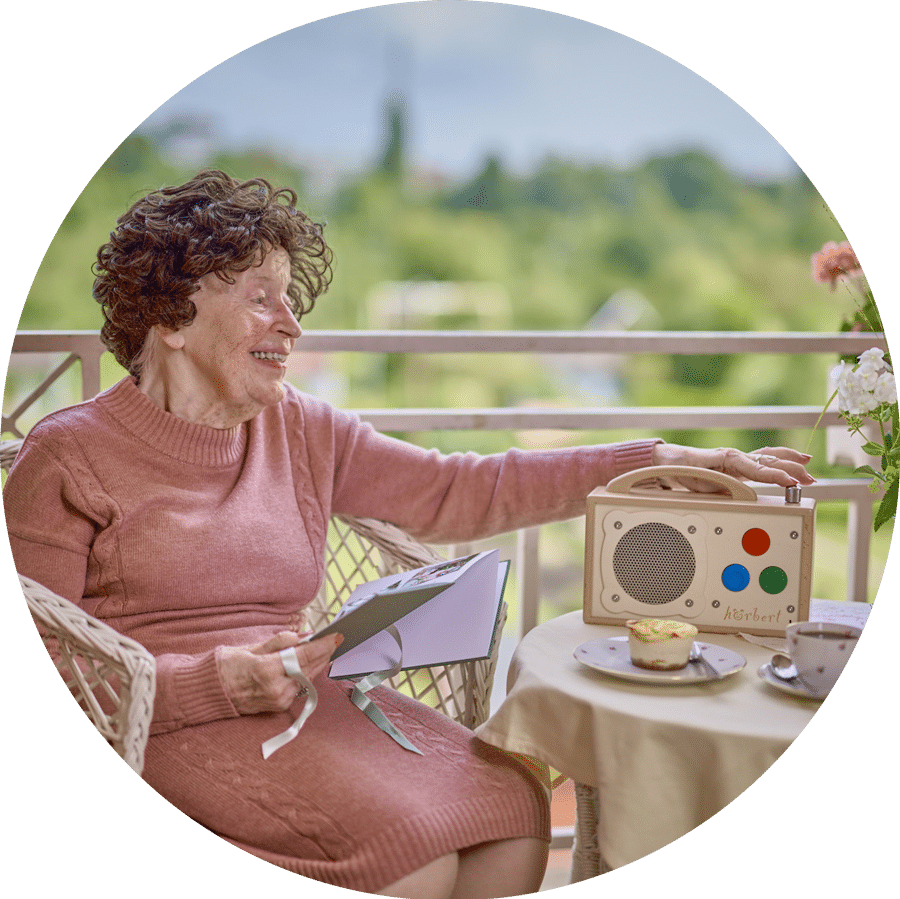
Turning on music, radio or a recording from the family by oneself may seem like a small action at first glance. In reality, it can be much more: a way to begin the day in one’s own way, to calm down, to awaken memories or to create a familiar atmosphere around oneself.
Such small decisions help preserve the feeling that everyday life does not simply happen, but that one can still actively take part in it. Research on ageing shows that the feeling of control is connected with many areas of health and well-being in later life (Robinson & Lachman, 2017). Even when ageing is accompanied by significant frailty and a greater need for support, the feeling of having influence over everyday things remains important for well-being and self-esteem (Nyende et al., 2023).
Our curated podcast recommendations for older people, covering a wide range of interests: travel, history, news, crime dramas, etc.
And how to make this form of entertainment easily accessible to older people. With an automatic update feature for new episodes.
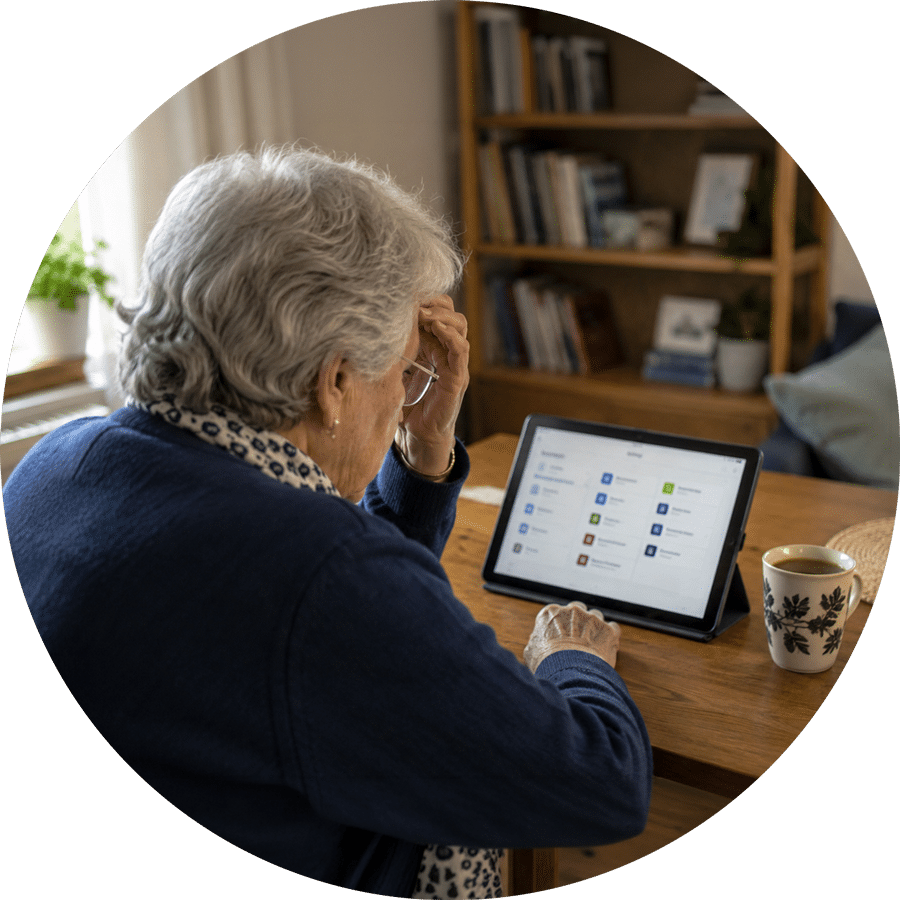
Technology can help — or overwhelm
Many adult children of older people know this situation very well: you want to make it easier for someone close to you to access music, audiobooks, radio or voices from the family. In theory, there are countless possibilities today. Smartphones, tablets, apps, streaming services, messengers, wireless speakers.
The problem is: what feels self-evident to younger people can quickly become a barrier for older people.
A screen requires good eyesight, concentration and precise touch. An app requires remembering several steps. A menu may change after an update. A password may be forgotten. A button may be too small. Notifications can be distracting. Too many options do not always provide security — sometimes they take it away.
That is why good technology for older people should not primarily impress with as many functions as possible. It should be understandable, reliable and calm to use.
Technology is at its best when it stays in the background — so that the device itself is not the focus, but what it is really about: music, voice, memory and the rhythm of the day.
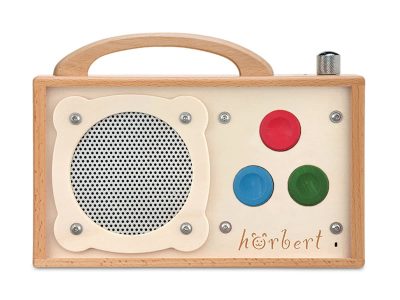
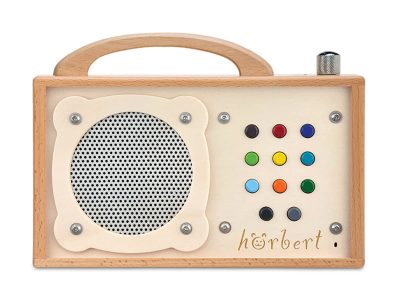


Why simplicity enables more independence
Sometimes simplicity is mistaken for limitation. For older people, however, exactly the opposite can be true. Simple operation does not take possibilities away. It gives them back.
When a device works clearly and understandably, an older person does not have to ask for help every time. They do not have to be afraid of “breaking something”. They do not have to click through several screens or wonder where a function has suddenly gone.
They can simply press a button and listen to what has been prepared for them.
This is especially important for people with limited hand mobility, weaker eyesight, concentration problems or early memory difficulties. In such situations, intuitive operation can reduce frustration and strengthen the feeling of still being able to carry out an important action independently.
This feeling is very important. Those who experience that they can still do something by themselves often feel safer. They are more willing to stay active. They withdraw less often from small everyday actions. And they remain more easily connected to their own daily life.
This article is based on publications on healthy ageing, autonomy in later life, the sense of control, self-determination in care, and the role of music in the well-being of older people. It does not replace medical, therapeutic or nursing advice, but is intended to provide information and support.
Bibliography
Nyende, A., Ellis-Hill, C., & Mantzoukas, S. (2023). A sense of control and wellbeing in older people living with frailty: A scoping review. Journal of Gerontological Social Work, 66(8), 1043–1072. https://doi.org/10.1080/01634372.2023.2206438
Robinson, S. A., & Lachman, M. E. (2017). Perceived control and aging: A mini-review and directions for future research. Gerontology, 63(5), 435–442. https://doi.org/10.1159/000468540
World Health Organization. (2020, October 26). Healthy ageing and functional ability. https://www.who.int/news-room/questions-and-answers/item/healthy-ageing-and-functional-ability